Computer Science and Engineering with AI&ML
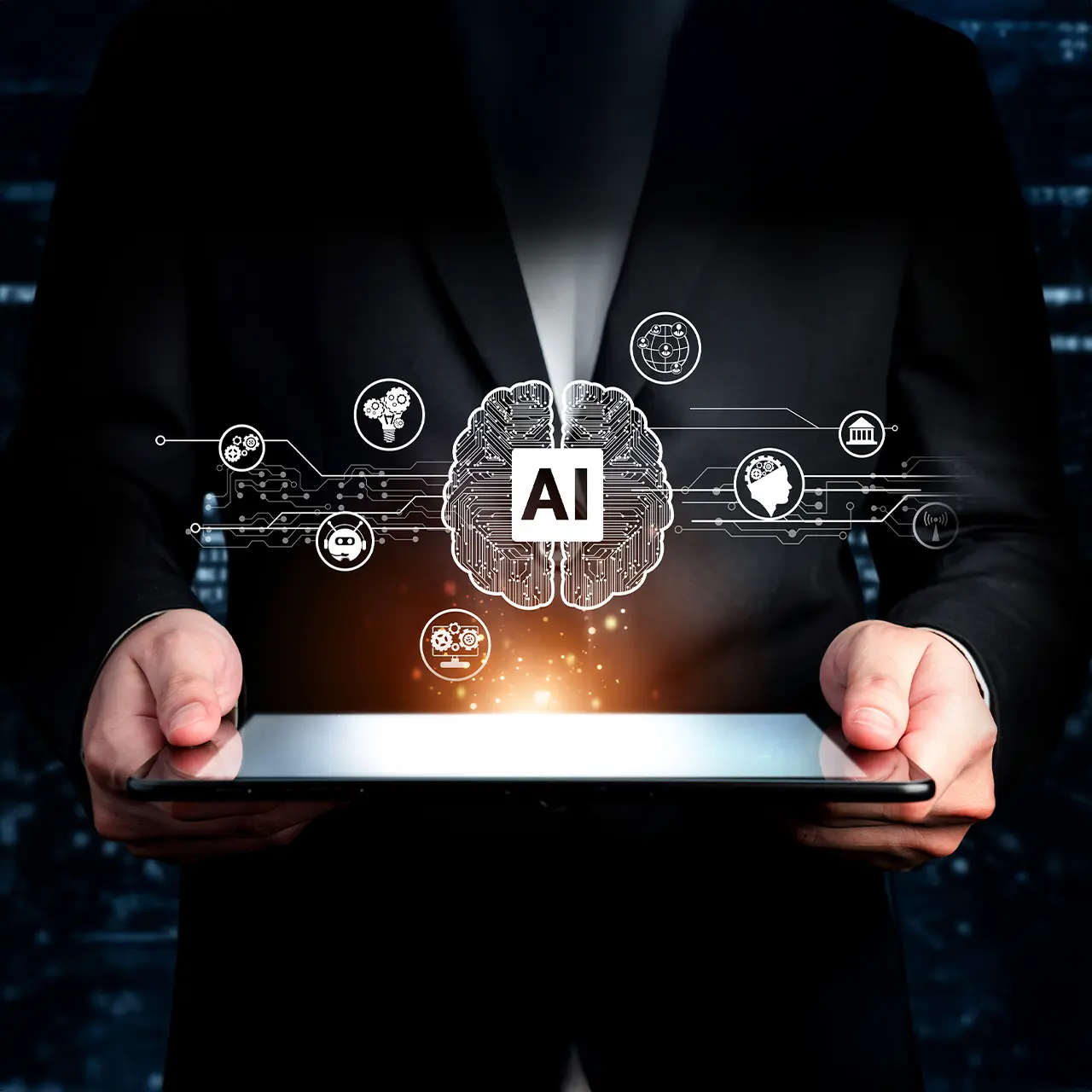
Building strong foundations in Artificial Intelligence and Machine Learning for future-ready technology careers
B.E. Computer Science and Engineering (Artificial Intelligence and Machine Learning)
Engineering for Data-heavy Intelligence Models
KiTE’s B.E. program in Computer Science and Engineering with a specialization in Artificial Intelligence and Machine Learning is a transformative computing discipline that drives intelligent automation, autonomous systems, and advanced information processing across global industries. Built on Machine Learning models and data-driven algorithms, AI systems are designed to analyze large-scale data using modern computing infrastructure to solve complex, real-world problems and accelerate innovation.
This undergraduate program builds a strong foundation in core Computer Science concepts while integrating advanced AI and ML technologies. The program provides students with early exposure to hands-on AI and ML applications, preparing them to engage with one of the most competitive and rapidly evolving technology domains globally.
Program Overview
Program Type
Duration
Department
Program Status
Credits Required
Core Courses:
Elective Courses
What makes our AI ML course most sought after?

Differential Learning Experience

Industry Integrated Curriculum

Capstone Projects (Client Relevant)

Idea Labs & Largest Data Center in Coimbatore
Curriculum
Curriculum Overview
The B.E. Computer Science and Engineering with specialization in Artificial Intelligence and Machine Learning at KGiSL Institute of Technology follows Anna University regulations under the Choice-Based Credit System (CBCS). The four-year curriculum combines core computer science foundations with advanced AI and ML concepts to prepare students for intelligent, data-driven system development.
The program emphasizes strong theoretical grounding, hands-on practice, ethical awareness, and flexibility through specialization electives and industry-aligned learning.
The curriculum is divided into core areas:
Professional Core Courses (PC)
Specialized AI & ML Courses
Employability Enhancement Courses (EEC)
Engineering Sciences & Basic Sciences (BS/ES)
Semester Highlights
Phase
Duration
Focus Areas
Key Activities
Foundation
Semester I & II
Basic Sciences, Engineering Fundamentals, Programming in C & Python
Programming labs, workshops, communication skills
Core CSE
Semester III & IV
Data Structures, OOP, DBMS, OS, Networks, Intro to AI & ML
Labs, mini projects, technical club participation
Advanced & Elective
Semester V & VI
ML, Deep Learning, Data Mining, Cloud Computing, Electives
Specialization electives, research-based mini project
Project & Career
Semester VII & VIII
Advanced electives, Open electives, Final Year Project
Project execution, placement training, presentations
Specialization Offered – Artificial Intelligence & Machine Learning
Students opting for the AI & ML specialization gain in-depth exposure through professional electives and innovation courses, including:

Admission
📞 For Admission Contact Number
For Registration, submit your
Candidates seeking admission to the B.E. CSE (AI & ML) degree course are required to submit the following certificates:
Placements or Companies Hired









Gallery Section




Why B.E. Computer Science and Engineering with AI&ML at KGiSL Institute of Technology?

Industry-aligned autonomous curriculum

Flipped classrooms with integrated labs

Active industry internships and projects

KGiSL campus placement program
Placements and Achievements
The Department of Artificial Intelligence & Machine Learning maintains a strong track record of placements in core IT, SAAS, banking, tech, automotive and AI-data companies. Graduates are consistently recruited by major multinational corporations and leading Indian IT services firms.
Top Placements - Campus Recruitment
No placements found.
Vision and Mission

Vision
To evolve as a Prominent Department in producing Highly Competent Computer Science and Engineering Graduates contributing to the welfare of the Industry and Society at large.

Mission
Objectives and Outcomes
Program Educational Objectives
PEO1
Graduates will become competent AI and ML professionals who apply strong foundations in computer science and modern AI technologies to design, develop, and deploy secure, efficient, and scalable software and intelligent systems for industry and society.
PEO2
Graduates will pursue higher studies, research, and continuous professional development, contributing innovative and ethical AI solutions through collaboration with academia, industry, and research organizations to address emerging global challenges.
PEO3
Graduates will demonstrate leadership, teamwork, communication, and soft skills while upholding human values, ethical responsibility, and social commitment, thereby driving the responsible and trustworthy adoption of AI in diverse domains.
Program Outcomes
PO1

Engineering knowledge
Apply knowledge of mathematics, natural science, computing, engineering fundamentals, and an engineering specialization, as specified in WK1 to WK4 respectively, to develop solutions for complex engineering problems.
PO2
Problem analysis
Identify, formulate, review research literature, and analyze complex engineering problems, reaching substantiated conclusions with consideration for sustainable development (WK1 to WK4).
PO3
Design / development of solutions
Design creative solutions for complex engineering problems and design/develop systems, components, or processes to meet identified needs, considering public health and safety, whole-life cost, net zero carbon, culture, society, and environment as required (WK5).
PO4
Conduct investigations of complex problems
Conduct investigations of complex engineering problems using research-based knowledge, including design of experiments, modelling, analysis, and interpretation of data, to provide valid conclusions (WK8).
PO5
Engineering tool usage
Create, select, and apply appropriate techniques, resources, and modern engineering and IT tools, including prediction and modelling, recognizing their limitations to solve complex engineering problems (WK2 and WK6).
PO6
The engineer and the world
Analyze and evaluate societal and environmental aspects while solving complex engineering problems, considering their impact on sustainability, economy, health, safety, legal framework, culture, and environment (WK1, WK5, and WK7).
PO7
Ethics
Apply ethical principles and commit to professional ethics, human values, diversity, and inclusion; adhere to national and international laws (WK9).
PO8
Individual and collaborative teamwork
Function effectively as an individual, and as a member or leader in diverse, multidisciplinary teams.
PO9
Communication
Communicate effectively and inclusively within the engineering community and society at large, including comprehending and writing effective reports and design documentation, and making presentations while considering cultural, language, and learning differences.
PO10
Project management and finance
Apply knowledge and understanding of engineering management principles and economic decision-making to one’s own work, as a member and leader in a team, and to manage projects in multidisciplinary environments.
PO11
Life-long learning
Recognize the need for, and have the preparation and ability for:
Program Specific Outcomes
PSO1
Apply fundamental concepts of computer science including data structures, algorithms, database systems, computer networks, and object-oriented design to develop robust and efficient software solutions.
PSO2
Design and develop AI-based solutions using techniques in Artificial Intelligence, Machine Learning, Deep Learning, and Data Science, with a focus on integrating security to solve real-world problems
PSO3
Demonstrate responsible AI practices by integrating ethical principles, human values, security awareness, and interdisciplinary knowledge to develop trustworthy and socially beneficial AI solutions.
Curriculum Overview
The B.E. Computer Science and Engineering with Artificial Intelligence and Machine Learning curriculum at KGISL Institute of Technology is guided by the Anna University regulations and uses a Choice-Based Credit System (CBCS). Spanning four years, the curriculum is designed to provide comprehensive technical depth as well as interdisciplinary flexibility.
Year I
Year II
Year III
Year IV
How to Apply?
For Registration, submit your
Candidates seeking admission to the B.E. CSE (AI&ML) degree course are required to submit the following certificates:
📞 For Admission Contact Number